Will AI Replace Engineers? Risks and Opportunities
AI will not replace engineers. Artificial intelligence automates specific engineering tasks and shifts engineering work toward judgment about design trade-offs, validation of results, and accountability for outcomes. Employers still require engineers for these functions because AI systems do not carry legal or professional responsibility for a product's performance. The narrower question, will AI replace mechanical engineers, has the same answer for the same reason. The same conclusion holds in adjacent disciplines: AI does not replace software engineers either, though it has changed which software engineering skills employers hire for.
This article examines how Artificial Intelligence is changing the work of mechanical engineers, which tasks AI automates today, and which skills remain beyond its reach.
The article addresses practicing mechanical engineers evaluating AI tools for their workflows, engineering managers planning workforce and hiring decisions, and early-career engineers determining which skills to develop.
Key takeaways
Quick facts:
AI automates routine simulation and CAD variant generation, thereby shifting engineering work toward design judgment.
AI systems do not bear legal responsibility for a design; accountability remains with the engineer.
Demand for mechanical engineers continues to grow faster than the average across occupations.
Entry-level engineering hiring has tightened, while demand for engineers who validate AI-generated results has increased.
Engineering AI platforms compress product development cycles, thereby increasing the number of design variants engineers evaluate.
Table of contents
The future of mechanical engineering jobs: AI & career opportunities
Artificial intelligence in mechanical engineering: Applications
The current state of the mechanical engineering field
Mechanical engineering applies physical principles and mathematical analysis to motion, energy, force, and material behavior.
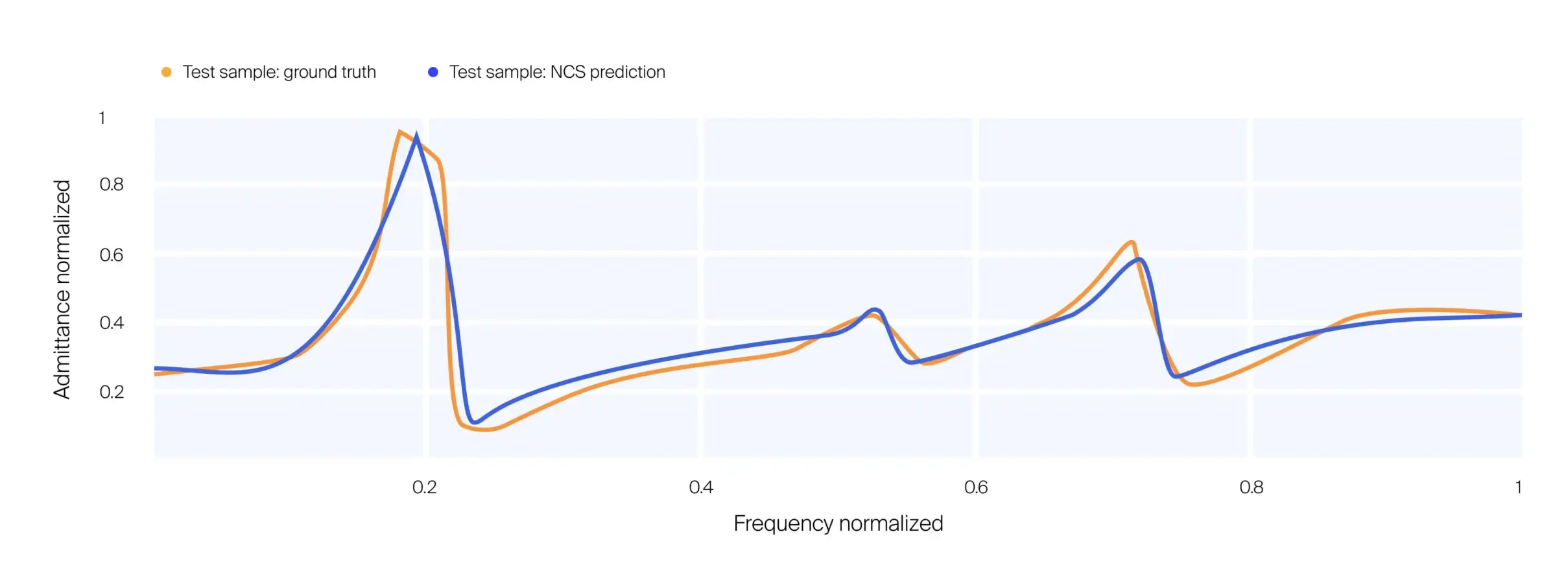
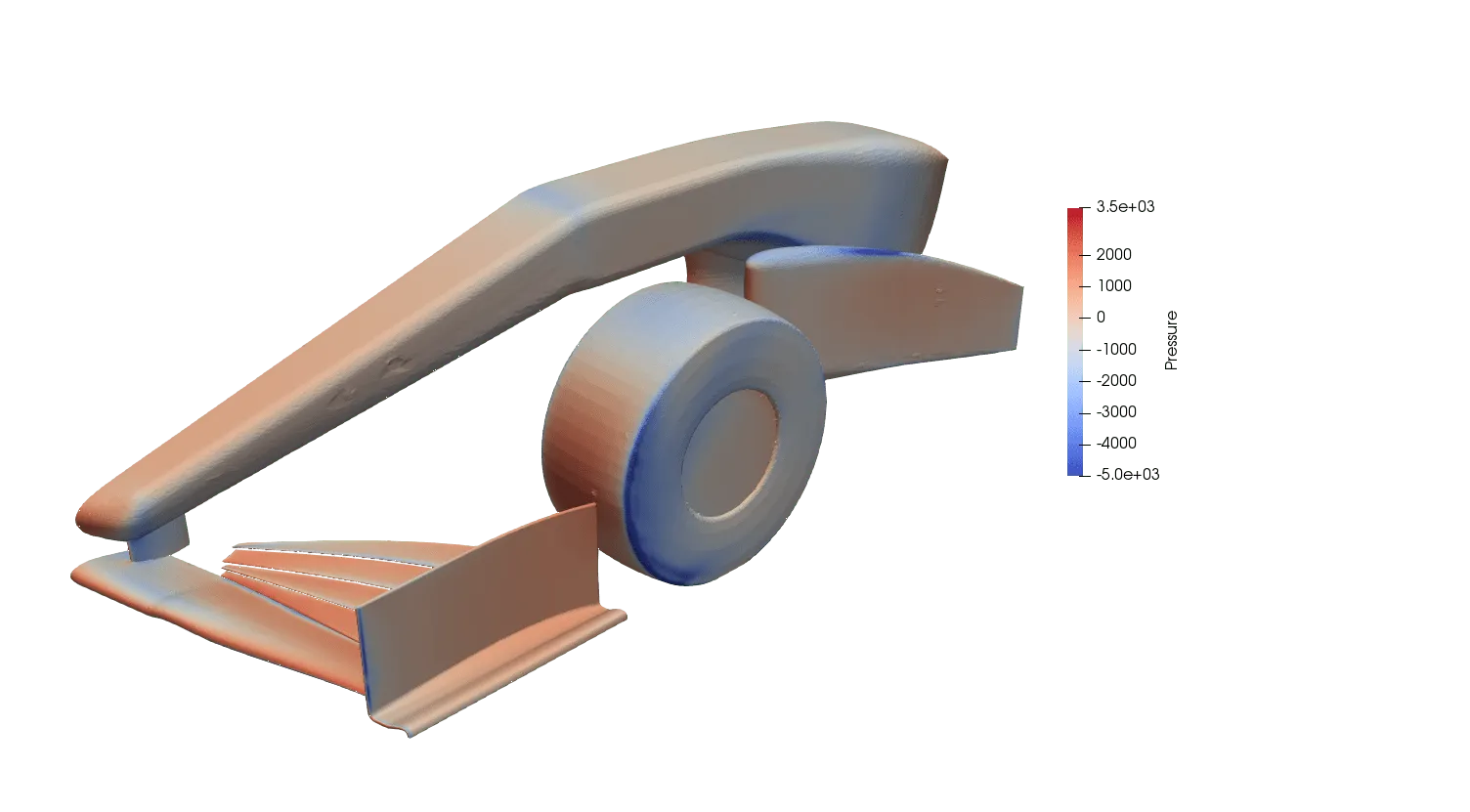
Engineering AI platforms now operate directly on this foundation. Neural Concept's 3D Deep Learning models predict physical fields over discretized geometries, and its AI Design Copilot generates CAD-ready geometry from design intent expressed in natural language by an engineer.
Agentic AI engineering extends the same models to multi-step tasks that run under engineer supervision.
The resulting software layer is engineering intelligence, positioned between an organization's CAD and CAE tools and the decisions its engineers make.
Mechanical engineers apply this foundation across several industries.
Automotive and aerospace companies rely on mechanical engineers for lightweight materials and for aerodynamics work on external vehicle surfaces.
Manufacturers rely on mechanical engineers to develop production lines and integrate robotics alongside the workers who operate them.
Energy and sustainability programs rely on mechanical engineers to design turbines, heat exchangers, and renewable energy systems, such as wind turbines, where efficiency targets determine the design.
Biomedical companies rely on mechanical engineers' knowledge of mechanics, materials, and fluid dynamics for prosthetics, robotic surgical tools, and artificial organs.

In cardiovascular device development, mechanical engineers apply fluid dynamics and simulation to blood flow simulations, drug delivery optimization, and dialysis machine performance.
Evolution of jobs
Mechanical engineering and mechanical design work evolved through three stages.
Manual drafting: mechanical manufacturing and civil engineering design relied on technical drawings produced by hand or with drafting machines.
Digital engineering: computer-aided design (CAD) and computer-aided engineering (CAE) tools replaced manual drafting.
Analytics-driven engineering: artificial intelligence algorithms now support design and simulation decisions, and automation in mechanical engineering covers a growing share of routine workflow steps.
Each stage changed which tasks an engineer performs by hand and left the responsibility for the result with the engineer. Learn about this pattern in the analysis of the future of engineering decision making.
What are the risks of AI for mechanical engineers?
Integrating AI systems and engineering automation into mechanical engineering workflows raises three primary concerns: job displacement from automation, the reliability of AI-assisted decisions, and the limits of machine-generated designs. Automated tools increasingly perform repetitive tasks, such as basic CAD modeling and routine simulations, reducing the manual input these tasks previously required.
AI adoption in mechanical engineering produces cost reductions and improved reliability. Automated systems depend on historical data patterns, so they generate reliable outputs within a system's validated operating range and less reliable outputs outside it. In routine engineering work, AI systems now perform the vast majority of repetitive calculations that once consumed junior engineers' time, and validation of the results still requires an engineer's review. Engineering trade-offs require qualitative judgment that draws on physical intuition, manufacturing constraints, and project-specific cost pressure, a combination that current general-purpose AI systems do not replicate.
Engineering work extends beyond calculation into judgment calls that carry legal and safety consequences. Automated tools produce useful output for bounded, well-specified tasks, and engineers retain responsibility for the decisions these tools cannot make.

How AI is enhancing mechanical engineering careers
Artificial intelligence changes specific day-to-day tasks for mechanical engineers, and its top applications across engineering disciplines show how these changes consolidate into new workflows. Three examples illustrate the pattern.
AI supports rather than replaces engineering tasks. AI systems perform specific computational tasks, such as stress analysis and thermal simulation, that previously required hours or days of engineering time. The Neural Concept platform, for example, generates predictions while engineers simultaneously adjust design parameters, shifting engineers' work from running repetitive analyses toward interpreting results and evaluating design trade-offs. Eaton's Innovation Center documented this shift in a technical paper titled "Optimization of Power Module Cooling Plate."
AI-powered design automation expands the design space engineers can explore. Tools such as PTC Creo's Generative Design Extension and Autodesk Fusion 360's generative design feature take load conditions, material constraints, and manufacturing methods as inputs and produce multiple viable designs. Aerospace engineers use these tools to redesign aircraft brackets for reduced weight while meeting safety requirements, and the engineer's role shifts toward defining constraints and selecting the most practical solution from the AI-generated options.
Predictive engineering analytics extends engineers' oversight beyond the design phase. Digital twins, such as those built on Siemens Xcelerator, process near-real-time data from sensors on installed equipment to monitor its condition. Engineers use these insights to schedule maintenance and plan design modifications based on measured performance data, and AI-powered predictive maintenance systems within predictive engineering analytics flag equipment likely to fail before it requires human intervention.
Why automating engineering tasks is not the same as replacing engineers
Engineering automation performs best on bounded, repeatable, and parameterized workflows, such as generating standard product variants from predefined templates and engineering rules. Building these workflows still requires engineers to define the parameters and validated performance limits specific to each product line.
Engineers determine whether a new request falls within a system's validated scope or requires manual engineering work outside that scope.
Generated designs still require review before adoption:
Feasibility: whether the design can be built as specified.
Performance: whether the design meets required performance targets.
Manufacturability: whether existing manufacturing processes can produce it.
Compliance: whether the design meets applicable regulatory and safety requirements.
Where relevant, engineering teams validate generative outputs against CAE results, experimental data, or physical testing.
The mechanical engineering role extends beyond design generation into prototyping and physical testing, troubleshooting production issues, and verifying that the manufactured product matches the intended design.
| Task | What AI does today | What stays with the engineer |
|---|---|---|
| Routine simulation | Runs stress and thermal analyses that previously took hours or days | Interpreting the result and judging the design trade-off behind it |
| CAD variant generation | Produces multiple viable geometries from load, material and manufacturing inputs | Defining the constraints, then selecting the most practical option |
| Design review | Nothing: a generated design is an input to review, not an output of it | Feasibility, performance, manufacturability and regulatory compliance |
| Predictive maintenance | Flags equipment likely to fail from sensor data on installed hardware | Scheduling the intervention and deciding on the design change it implies |
| Technical documentation | Drafts reports and standard documents from project files | Review before use, plus stakeholder communication and ethical calls |
| Accountability | None: an AI system carries no legal or professional responsibility | Legal and professional responsibility for the product's performance |
The net effect is a shift in workload rather than a reduction in engineering responsibility. Engineers spend less time producing routine configurations and more time managing exceptions, validating results, and optimizing designs for cost and manufacturability.
The future of mechanical engineering jobs: AI & career opportunities
Industry 4.0 technologies and AI are reshaping mechanical engineering roles and creating new opportunities within the field.

Source: World Economic Forum, "Jobs of Tomorrow" report.
New roles created by AI technologies
AI created engineering roles that did not exist a decade earlier. AI-driven mechanical design specialists optimize components using machine learning. AI model trainers ensure automation systems learn from validated engineering datasets. Software developers and data engineers now work inside mechanical engineering programs, building and maintaining the pipelines that feed these models.
The World Economic Forum's report on Large Language Models and Jobs found that LLMs will reshape business operations and the nature of work, displacing some existing jobs, changing others, and generating a larger number of new positions overall.
New job opportunities created by AI are expected to outnumber the positions AI eliminates, based on this analysis.
Industry 4.0 and the future of mechanical engineering careers

Industry 4.0 integrates automation, AI, and the Internet of Things (IoT) into manufacturing.
Mechanical engineering roles are evolving beyond traditional research and development, design, and manufacturing functions. Mechanical engineers increasingly coordinate cyber-physical systems that connect a physical product to the digital thread recording its design and production history.
How mechanical engineers can upskill for the AI era
Mechanical engineers who build practical skills in AI-assisted design tools and machine learning fundamentals remain competitive as engineering automation expands. Entry-level hiring at the largest technology companies has tightened: new-graduate hires at Big Tech are down 25% from 2023 and more than 50% from 2019, according to SignalFire's 2025 State of Tech Talent report, a trend that signals the value of demonstrable AI skills for early career engineers. The question of whether AI will replace software engineers is the same question mechanical engineers now ask about their own discipline, and the ai disruption reshaping software engineering skills at technology companies is arriving in mechanical engineering on a similar trajectory. Professional development through specialized certifications, online courses, and applied projects with emerging technologies keeps engineers current with manufacturing practice, and a review of current AI tools for mechanical engineers identifies which categories are worth learning first.
Artificial intelligence in mechanical engineering: Applications
AI in mechanical engineering redistributes work between automated systems and human engineers rather than replacing human expertise.
AI-driven automation reduces the manual labor and time spent on routine tasks and repetitive calculations. As AI in engineering applications, benefits, and trends continue to expand, successful AI implementation lets engineers spend more time on higher-value design decisions that require domain judgment, such as material trade-offs and geometric constraints, and less time on data processing a computer performs faster; this shift is one of the clearer ways AI implementation provides more value to an engineering program than the manual process it replaces.

AI applications in the design process
Industrial product design is an iterative process between CAD designers and CAE simulation engineers, and AI is transforming engineering design with predictive modeling and generative methods.
The Neural Concept platform is a physics-aware AI system that helps mechanical engineers and CAE engineers collaborate across the design process, an approach to cross-team work that Neural Concept describes as breaking down silos in engineering design teams. The platform reduces end-to-end product development time by up to 75% and accelerates simulation throughput by up to 10x for its OEM customers, according to published customer results. Automotive and aerospace companies generate the large datasets that make this collaboration possible, and the resulting democratization of simulation and generative design gives more engineers direct access to these methods without requiring a dedicated data science team for every project. AI-driven simulation lets engineering teams evaluate design variants at a massive scale that manual simulation workflows cannot match.
One practical application among the applications of Machine Learning in mechanical engineering is bypassing manual CAD cleanup and meshing steps: the Builder Co-Pilot generates predictions of physical fields, such as stress and temperature distributions, directly from raw CAD geometry, thereby accelerating the product development process. This lets engineers prioritize higher-level configuration decisions instead of manual data preparation.

Skills for the future: Adapting to an AI-driven industry
Mechanical engineering professionals need a hybrid skill set that combines traditional engineering knowledge with newer computational methods.
Three skill areas matter most for engineers working alongside AI systems:
Machine learning fundamentals, covering the techniques behind AI-assisted design tools and the interpretation of machine learning models' outputs.
Data analysis capabilities for AI-driven optimization, including basic proficiency in a programming language, such as Python, and its engineering libraries for data processing.
Domain expertise that lets an engineer judge when an AI-generated result is reliable and when a project requires manual analysis.
The skills engineers need beyond these three areas fall into two groups.
Technical adjacencies: digital twin technology, and systems thinking, the ability to reason about how a change in one subsystem affects the performance of the whole product.
Organizational capabilities: project management adapted to AI-assisted development cycles, and risk assessment covering the failure modes an AI-generated design can introduce.
Soft skills determine how reliably an engineer transfers an AI-generated result to the people who act on it. Engineers who collaborate directly with data scientists and data engineers identify where an AI-driven workflow fits current engineering methods and where it requires adjustment.

The Internet of Things (IoT) connects physical devices to a network, letting them exchange data for automated monitoring and control.
Engineers who combine established mechanical engineering fundamentals with newer AI-assisted methods adapt fastest to this environment. AI tools support engineering work; they do not substitute for the human element a trained engineer contributes, namely physical intuition and professional accountability.
Impact of LLMs on mechanical engineering jobs
Large language models (LLMs) are AI systems trained on extensive text corpora that generate and interpret natural language through deep learning. LLMs support translation, summarization, and dialogue generation across a range of applications. In software engineering, AI coding assistants already generated close to a third of the Python functions written by US developers when the study "Who is using AI to code? Global diffusion and impact of generative AI" last measured the share (29% of Python functions in the US), and adoption has continued since. Senior engineers and technical leads have generally kept closer oversight of this output than junior staff, since AI adoption of this kind concentrates the productivity gain among developers who can already evaluate the generated code.

AI tools, such as LLMs, change engineering roles and responsibilities in four areas.
Enhanced design. LLMs provide design insights, generate draft specifications, and suggest improvements based on text input and prompts from an engineer.
Automated documentation. LLMs generate technical reports and standard documentation through natural language processing, letting engineers spend more time on analysis and design; LLMs perform less reliably at stakeholder communication and ethical decision-making, functions senior engineers continue to handle directly.
Data insights. LLMs interpret reports and summarize existing analysis; statistical analysis and dataset mining require dedicated analytical tools rather than an LLM.
Job impact. LLM adoption creates new engineering roles while automating some coding tasks and documentation work in software engineering; it does not remove the need for human review, and it increases the value of creative problem solving and of the soft skills engineers apply when presenting results.
Conclusion. Will AI replace engineers?
AI will not replace engineers. Artificial intelligence changes the tasks mechanical engineers perform and does not eliminate the demand for mechanical engineers. Automation absorbs routine calculation and standard documentation work, while the engineering job market shifts toward concept-driven roles built on design judgment and system-level decision-making.
The U.S. Bureau of Labor Statistics projects mechanical engineering employment to grow 11% between 2025 and 2035, adding roughly 17,800 openings each year, a rate it describes as much faster than the average for all occupations.
Data scientists and computer scientists play an increasing role in this transition. These specialists build applications that handle iterative engineering tasks using deep learning and machine learning algorithms, while mechanical engineers focus on design challenges that fall outside the validated scope of these systems.
Computer scientists and AI specialists are creating new opportunities for mechanical engineers working in manufacturing and product development. AI-driven predictive models give engineers insight into product performance before physical testing begins, across a supply chain that includes OEMs and suppliers. Neural Concept's engineering AI platform, for example, combines archived CAE simulation data with CAD geometry to generate these predictions.
Organizations adopting these tools also determine AI Ownership. An engineering organization that trains models on its own data retains the design knowledge those models encode.
Engineers apply artificial intelligence by combining automated tools with human expertise and professional accountability. AI's impact falls on routine work, and human oversight remains necessary because AI systems do not carry legal responsibility for engineering outcomes. A tool that extends human skills leaves the mechanical engineering community with greater capacity for design judgment and creativity, where humans outperform automated systems.
This combination positions the mechanical engineering profession for continued growth rather than decline.
Where the engineer stays in the loop
The argument above has a practical consequence for tooling. If the engineer keeps the judgment and the accountability, then the useful AI is the one that puts more evaluated options in front of that judgment, not the one that tries to hand back a finished answer. That is the difference between a model that replaces a step and a model that widens the choice at the step.
Neural Concept builds that layer for physical products, on a company's own CAE and CAD archive rather than on generic data. General Motors applied it to pedestrian safety across 11 vehicle programs, moving an assessment that took weeks down to seconds. Subaru brought a stamping simulation from three hours to two minutes. In both cases the engineer still signs off; there are simply more candidates on the table when they do.
Ready to give your engineers more options to judge, not fewer decisions to make?
Explore the platform →FAQ
In what areas of mechanical engineering is AI most impactful?
AI has the greatest impact on product development through generative design and simulation acceleration, and it supports the implementation of a design once it moves from concept to deployment. In manufacturing, AI enables monitoring and preventive maintenance through defect detection. AI-enabled mechanical systems, such as self-driving cars, extend this impact into deployed products, and computer vision systems support many of these defect-detection and autonomous-system applications.
What tasks in mechanical engineering are most susceptible to AI automation?
AI handles routine tasks such as calculations, basic CAD modeling, and standard documentation. It can automate design iterations by replacing standardized simulation configurations with AI-generated predictions. These functions increase engineer productivity, and engineering judgment and human accountability remain necessary for safety-critical systems even when AI assists them.
Will AI create new job opportunities in mechanical engineering?
The field needs AI-assisted design specialists, robotics integration engineers, and data scientists with manufacturing technology expertise. Engineers develop AI systems for mechanical applications, verify AI-generated solutions, and connect traditional engineering methods with new AI capabilities.
What engineering roles will not be replaced by AI?
Engineering work that requires complex problem-solving and human interaction requires expertise that current AI systems do not replicate. System architecture, conceptual design, and engineering leadership depend on human judgment and strategic thinking beyond AI's current capabilities.
Will AI replace software engineers?
AI does not replace software engineers. AI coding assistants generate a substantial share of routine code, and software engineers remain responsible for architecture, review, and correctness. The change appears in which software engineering skills employers hire for rather than in the number of engineers they need.
Will robots replace engineers?
Robots do not replace engineers. Innovation, critical thinking, and complex problem-solving require human insight that current AI systems cannot replicate. Engineers direct development while using AI to strengthen their capabilities and decisions.
Sources
The figures and studies cited above, with the reference for each.
U.S. Bureau of Labor Statistics, Occupational Outlook Handbook: Mechanical Engineers — 11% projected growth 2025-2035, about 17,800 openings a year, median pay $104,110 (May 2025).
SignalFire, State of Tech Talent Report 2025, 20 May 2025 — new graduates are 7% of Big Tech hires, down 25% from 2023 and more than 50% from 2019.
Who is using AI to code? Global diffusion and impact of generative AI, Science, 19 February 2026 — AI writes an estimated 29% of Python functions in the US; the productivity gain concentrates among senior developers, with no significant benefit measured for early-career developers.
World Economic Forum with Accenture, Jobs of Tomorrow: Large Language Models and Jobs, 18 September 2023.
Bartesaghi and Colombo, Embedded CFD Simulation for Blood Flow, Computer-Aided Design and Applications, 2013.
Eaton Innovation Center, Optimization of Power Module Cooling Plate, SAE technical paper 2024-01-2583.
PTC, digital thread. Tools named without a reference: PTC Creo Generative Design Extension, Autodesk Fusion generative design, Siemens Xcelerator.
Image credits, given in each caption: World Economic Forum, nedhayes.com, tech.eu and iblnews.org.